

Blog 37/ From Naming to Movement — When the Work Finds You
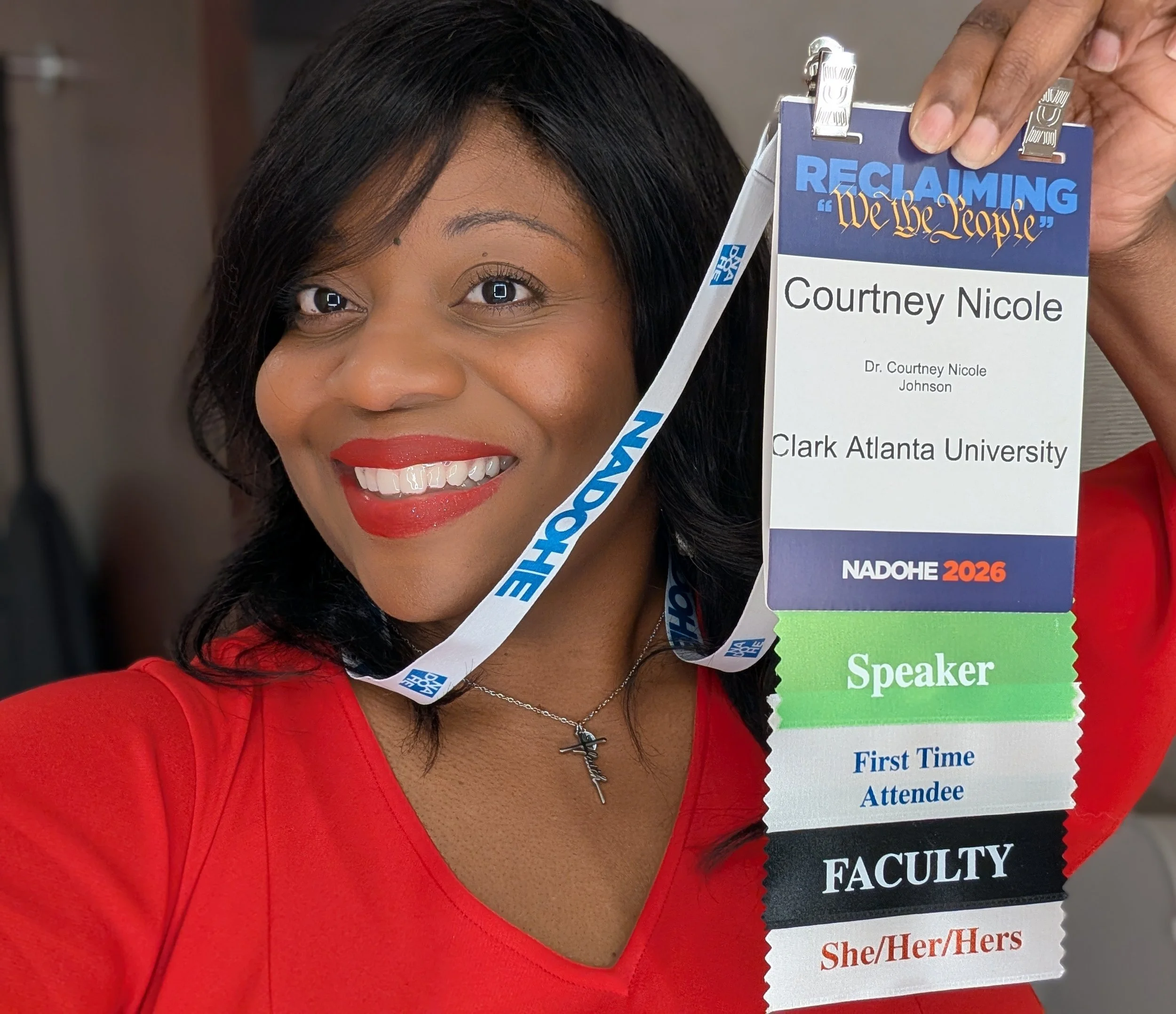
Dr. Courtney Nicole Johnson at the 2026 National Association of Diversity Officers in Higher Education (NADOHE) Annual Conference—presenting, naming, and advancing the Post-DEI Hollowing Phenomenon™
The Month That Shifted Everything
March did not simply pass.
It positioned.
It clarified.
It confirmed.
What began as a birthday month became something far more significant—a convergence of purpose, platform, and power.
I stood in a room at the National Association of Diversity Officers in Higher Education annual conference and presented my research on belonging as a democratic practice. And in that moment, something shifted.
It did not feel like introduction.
It felt like homecoming.
A Homecoming of the Work
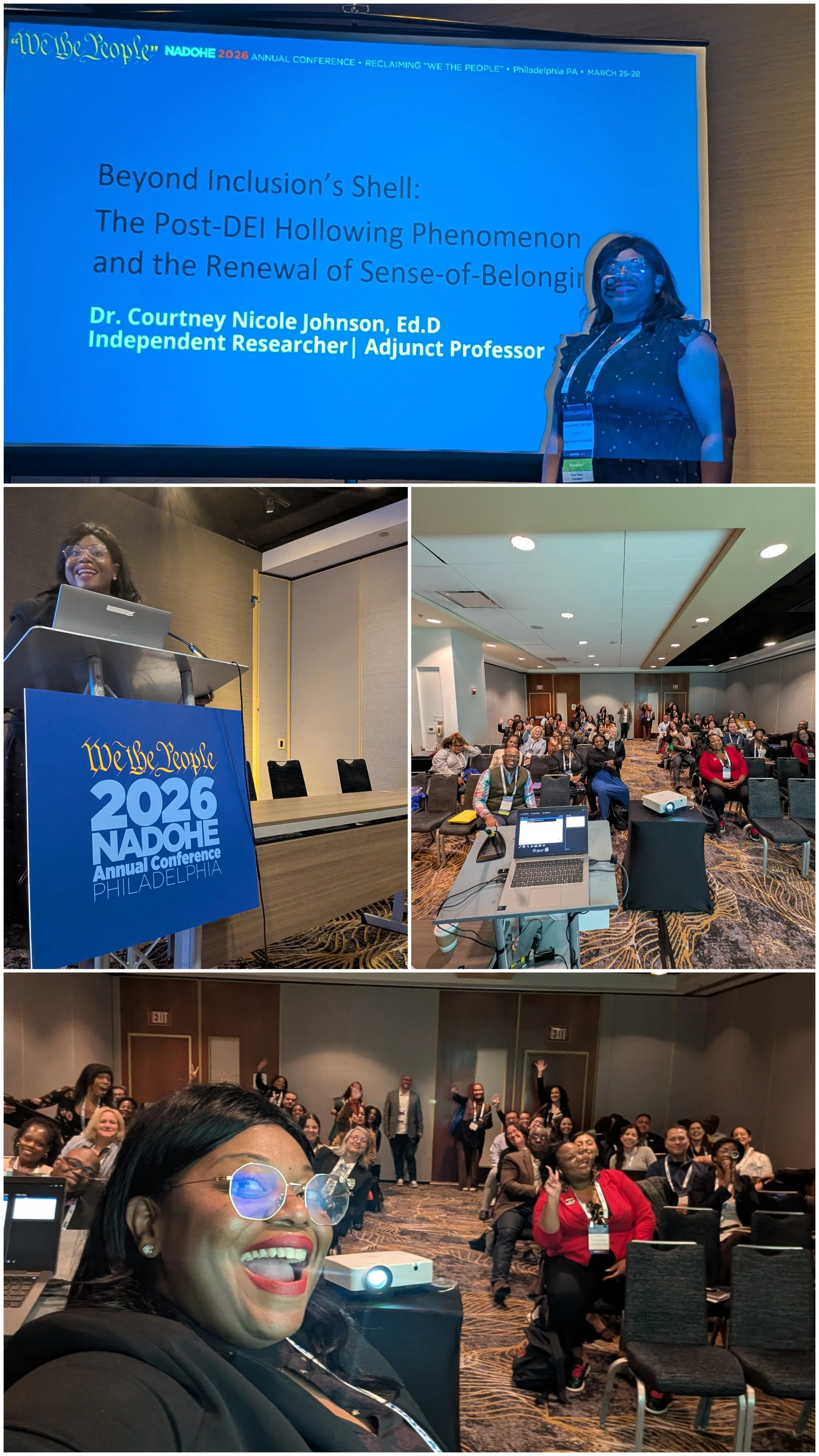
Presenting Beyond Inclusion’s Shell: The Post-DEI Hollowing Phenomenon and the Renewal of Sense-of-Belonging at the 2026 National Association of Diversity Officers in Higher Education (NADOHE) Annual Conference. A moment of scholarly homecoming, collective recognition, and the visible emergence of a shared language for understanding institutional change.
At National Association of Diversity Officers in Higher Education, I was not explaining my work into silence.
I was met with recognition.
With affirmation.
With urgency.
The room did not question whether the Post-DEI Hollowing Phenomenon™ existed.
They recognized it immediately.
Because they had seen it.
Felt it.
Navigated it.
And in many cases—survived it.
What I had named in 2025 was no longer just a theoretical contribution.
It was becoming a shared language for a lived reality.
When a Concept Becomes a Mirror
The Post-DEI Hollowing Phenomenon™ describes what many institutions are experiencing:
The structure remains.
The language remains.
But the support—the soul of the work—begins to disappear.
At NADOHE, I witnessed something powerful:
People were no longer asking “What is this?”
They were asking:
“How do we interrupt it?”
“How do we protect our students?”
“What does resistance look like in this moment?”
This is how you know your work is no longer just research.
It has become infrastructure for thought and action.
Beyond Inclusion’s Shell
In my presentation, I shared a central truth:
Belonging is not symbolic.
It is structural.
It is experiential.
It is democratic.
And when belonging is weakened, everything else begins to shift.
Students begin to:
self-monitor
withdraw
disengage to protect themselves
Because participation begins to feel conditional.
Spaces that once held meaning become performative.
Visible—but not felt.
Accessible—but not safe.
And that is the danger of hollowing.
Not always disappearance.
But distortion.
From National Stage to Global Conversation
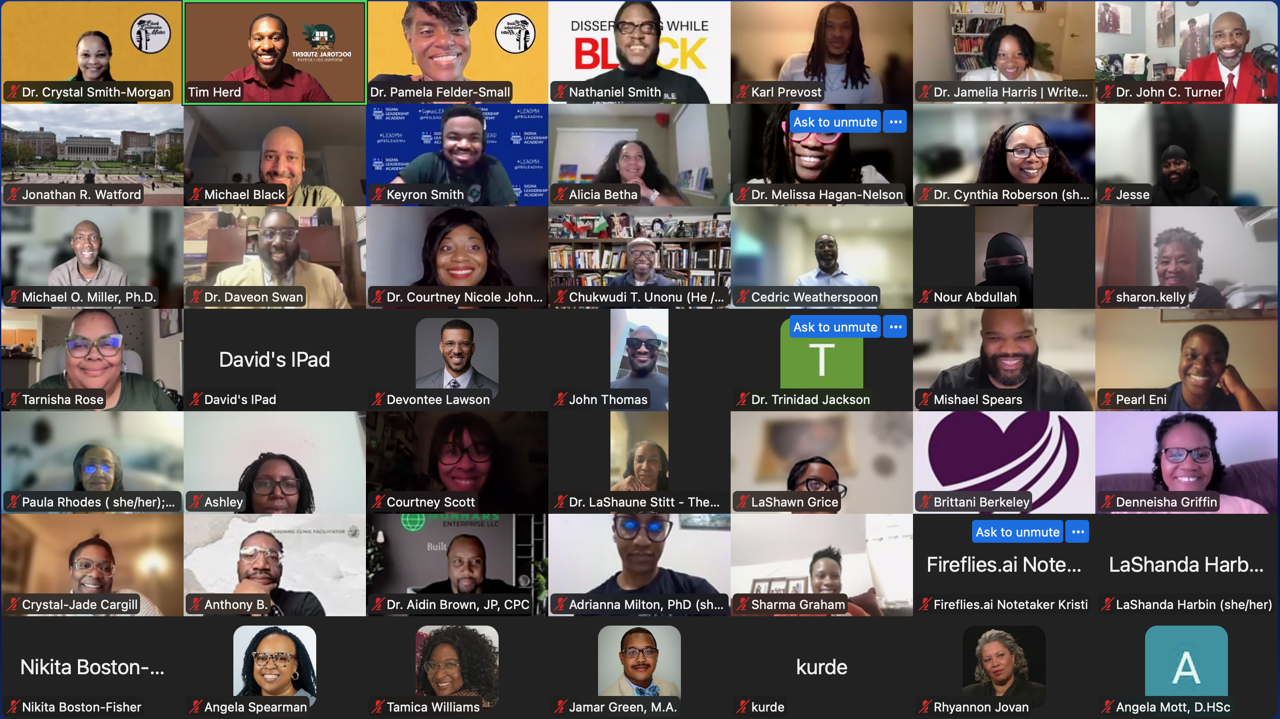
Contributing to the Virtual Village Teach-In, a global convening aligned with the United Nations Permanent Forum on People of African Descent, where scholarship on belonging and the Post-DEI Hollowing Phenomenon™ was positioned within a broader human rights framework centered on education and cultural participation.
And then… the work traveled.
On the final day of March, I had the honor of contributing to an international dialogue through the Virtual Village Teach-In, aligned with the United Nations Permanent Forum on People of African Descent (Thank you, Dr. Pam for the opportunity).
This moment expanded the conversation.
Because now, the question was no longer just institutional.
It was human.
Belonging as a Human Right
In my statement, I connected the Post-DEI Hollowing Phenomenon™ to two critical human rights principles:
Article 26 — the right to education
Article 27 — the right to cultural participation
And I offered this:
Access without support is not equity.
Students may still be present in institutions.
But presence is not participation.
And participation is not guaranteed when:
cultural centers are diminished
support systems are removed
identity-affirming spaces are destabilized
What we are witnessing is not always exclusion.
It is something more subtle.
More complex.
More dangerous.
It is partial inclusion.
And partial inclusion disrupts the full development of the human person.
The Work Is Expanding
In a matter of weeks, this work has:
been affirmed on a national stage
entered international human rights dialogue
sparked increased scholarly and practitioner interest
begun shaping how institutions name and understand this moment
And perhaps most importantly—
It has validated the voices of students.
Because this work did not begin with theory.
It began with them.
Their stories.
Their silence.
Their navigation of spaces that no longer hold them in the same way.
What Comes Next
The question is no longer whether Post-DEI Hollowing exists.
The question is:
What are we going to do about it?
For scholars:
We must continue to name what is happening—even when it is uncomfortable.
For practitioners:
We must protect the infrastructures that sustain belonging.
For leaders:
We must decide whether we are maintaining appearances… or restoring purpose.
A Final Reflection
If institutions leave the building standing…
but remove what made it a place of belonging—
Then we must ask:
Who is education truly for?
Closing Sip
March was not just a milestone.
It was a signal.
The work is resonating.
The language is spreading.
And the responsibility is growing.
Because once something is named—
It can no longer be ignored.
Remember, bold conversations, brewed fresh - one cup at a time!
Dr. Courtney Nicole Johnson
Founder of CourtneyCoffeeChats
Bold Conversations, Brewed Fresh.
Welcome to The Coffeehouse Collection - where higher education meets heart. Here, you will find Scholarly Sips, Courageous Cups, Life Latte Moments, and Freshly Brewed Reflections - bold conversation and personal insights brewed just for you!
