

Blog 28/ Policy, Pedagogy, and the Moment We Are In: A Scholarly Sip on the Post-DEI Hollowing Phenomenon™

In DC for my first national presentation at AAC&U.
That morning, I grabbed coffee and walked from the South Lawn of the White House, through the National Mall toward the Dr. Martin Luther King Jr. Memorial — taking in the Washington skyline and reflecting before stepping into my moment.
The monuments are quiet places of memory and movement.
So was I.
When Infrastructure Disappears but the Classroom Remains
A Presidents’ Day Reflection on Policy, Pedagogy, and the Post-DEI Hollowing Phenomenon™
Across Arizona — and across several states — diversity, equity, and inclusion initiatives are being restructured, reduced, or removed.
Administrative offices close.
Job titles change.
Budget lines disappear.
Yet classrooms continue.
The Post-DEI Hollowing Phenomenon™ names this moment.
What happens when equity infrastructure is dismantled, but the curriculum remains intact?
Most higher education institutions operate under accreditation standards that require:
Ethical reasoning
Intercultural communication
Workforce readiness
Inclusive leadership competencies
Student engagement benchmarks
These are not political slogans.
They are embedded learning outcomes.
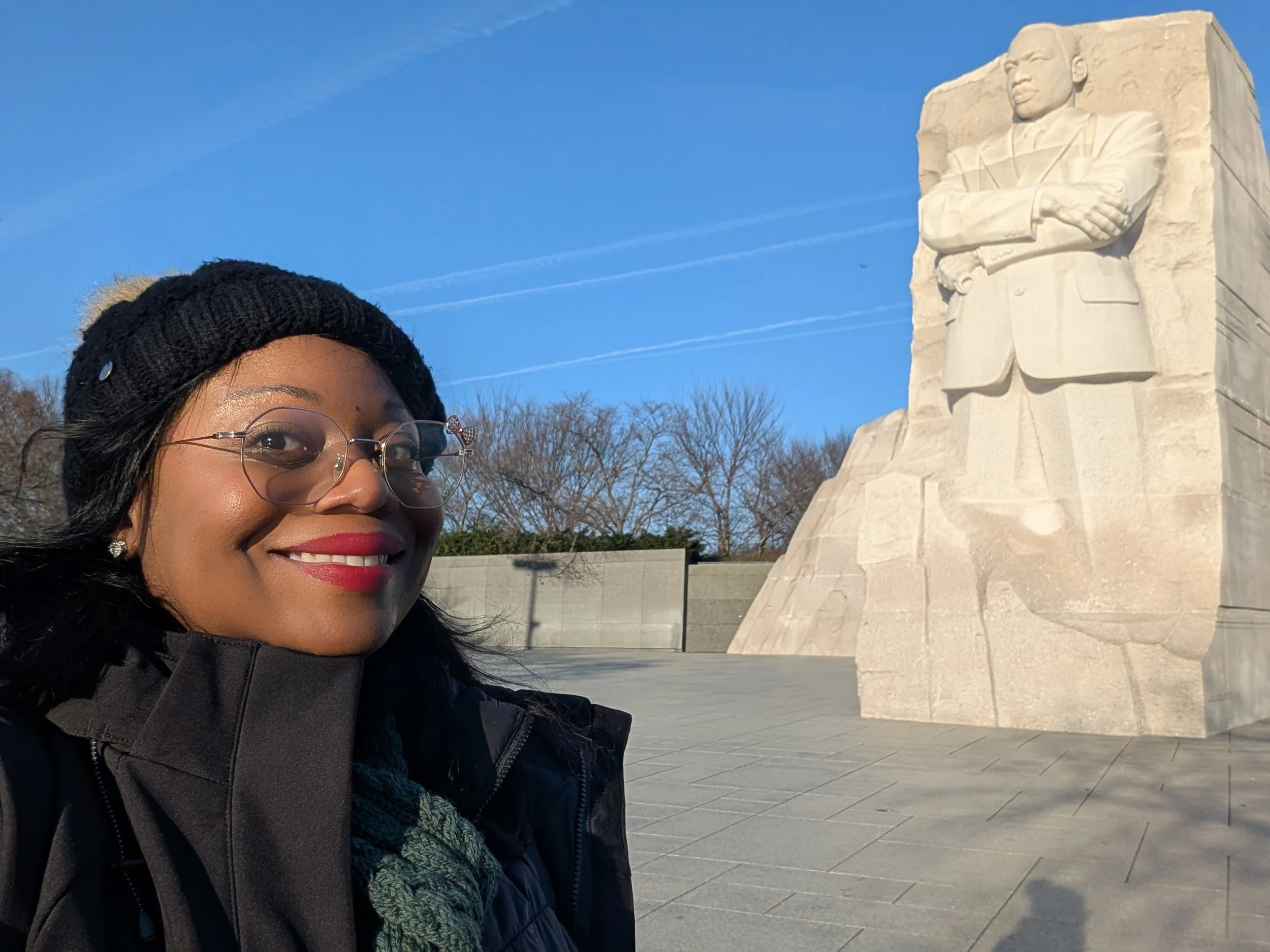
Standing at the Martin Luther King Jr. Memorial reminded me that civic progress is not abstract. It is cumulative.
Each generation inherits structures shaped by those who insisted on access, dignity, and participation.
I am mindful that my ability to research institutional change and speak nationally about student belonging rests on foundations laid long before me — in public movements and in private living rooms.
Textbooks in communication, business, public health, education, and leadership are written with cultural frameworks woven throughout. Faculty governance structures revise curriculum on multi-year cycles. Core competencies are institutional fixtures, not administrative trends.
Infrastructure can be hollowed quickly.
Curriculum cannot.
This creates a quiet tension inside institutions.
My doctoral research — recently presented at the Governor’s Office of African American Affairs Legislative & Leadership Day — examined what occurs when equity-centered support systems are removed during periods of DEI retrenchment.
The findings were clear:
When equity infrastructure disappears, students remain.
But their engagement shifts.
Their belonging becomes conditional.
Their trust recalibrates.
The Post-DEI Hollowing Phenomenon™ identifies the structural and emotional void created when equity-centered supports are removed while the appearance of inclusion remains.
In this current moment, we are witnessing an additional layer:
Infrastructure retrenchment without pedagogical recalibration.
Faculty may be instructed to remove “DEI,” yet core competencies, accreditation standards, textbooks, and curriculum maps continue to reflect culturally responsive frameworks that have shaped higher education for decades.
This is not defiance.
It is structural reality.
Policy decisions do not simply alter administrative charts.
They reverberate through lived student experience, retention patterns, leadership pipelines, and long-term workforce development.
Presidents’ Day invites reflection on governance — not as ideology, but as responsibility.
Responsible governance requires understanding downstream impacts.
It requires distinguishing between ideological framing and student-support architecture.
It requires acknowledging that classrooms are not insulated from policy ecosystems.
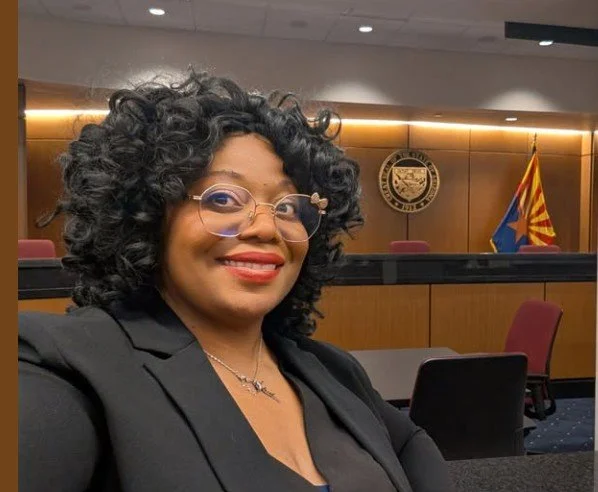
We are living in a policy moment that will shape an entire generation of students.
Showing up matters. Speaking matters. Documenting it matters.
Arizona State Capitol.
As Arizona navigates this historical moment, we must ask:
What kind of educational memory are we creating?
Students will remember how institutions responded during structural change.
Faculty will remember the ambiguity they were asked to manage.
Communities will remember whether access widened or narrowed.
Last week, standing inside the Arizona State Capitol, I was reminded that policy is never abstract. It is textured, immediate, and consequential. The conversations unfolding in legislative spaces do not stay there — they travel into classrooms, advising offices, and cultural centers.
It is a privilege to contribute to this conversation at this time.
As I reflect on this moment, I think of my great-aunt, Susan B. Perkins — a woman who understood that policy and lived experience are never separate.
History is not only written in legislation.
It is written in classrooms.
Students remain. And so does responsibility.
The question before us is how we will steward the structures that shape their experience.
Remember, bold conversations, brewed fresh - one cup at a time!
Dr. Courtney Nicole Johnson
Founder of CourtneyCoffeeChats
Bold Conversations, Brewed Fresh.
Welcome to The Coffeehouse Collection - where higher education meets heart. Here, you will find Scholarly Sips, Courageous Cups, Life Latte Moments, and Freshly Brewed Reflections - bold conversation and personal insights brewed just for you!
