

Blog 49 / Behind the Brew: When an Idea Refuses to Leave You

Long before becoming a Communication professor and national presenter, I learned how to make ideas come alive for an audience.
How a Lifetime of Asking Why Became a Scholarly Calling
Some ideas do not arrive fully formed.
They begin as questions.
They linger through classrooms, workplaces, conversations, and seasons of becoming. Long before we have the language to explain what we are seeing, we recognize that something is happening beneath the surface.
For me, the question was rarely, What is wrong with me?
I never believed that I was inferior, and I did not automatically accept other people’s assumptions as the truth about who I was.
My question was different.
Why do people think this way?
Why are people so invested in defining someone else?
Why do we create categories, attach meaning to them, and then treat those meanings as though they are natural and unquestionable?
Why do assumptions about race, appearance, language, intelligence, professionalism, and belonging influence how people are received before they have an opportunity to introduce themselves?
And how do these beliefs become embedded within institutions so deeply that they continue operating long after the people who established them are gone?
Those questions did not begin with my dissertation.
They began with curiosity.
Before I Had the Language
Growing up in Arizona, I learned that people could form conclusions about me before I spoke.
My skin tone, hair, facial features, body type, clothing, speech, and mannerisms could all be interpreted through ideas that existed long before I entered the room.
Sometimes, I was considered not light enough. At other times, I was viewed as not dark enough.
“I could be perceived as not “Black enough” because of how I articulated my thoughts, how I dressed, how I carried myself, or the words that came out of my mouth.”
What intrigued me was not only that people made these assessments. It was the confidence with which they made them.
How could someone decide who I was without knowing me?
How could a person believe that my appearance revealed something definitive about my intelligence, personality, interests, abilities, or value?
I did not know then that I would eventually earn four college degrees or conduct doctoral research. I was not consciously developing a research agenda.
I was simply observant.
I noticed how people interpreted one another. I noticed how certain assumptions traveled from person to person. I noticed how quickly perception could become judgment.
And I kept wondering why.
The Opportunity I Chose to Pursue
As a teenager, I imagined becoming a journalist.
More specifically, I wanted to become a music journalist—someone like Kurt Loder, reporting on artists, culture, and the stories shaping the moment.
I loved communication. I was drawn to information, storytelling, and the power of presenting ideas to an audience.
During my junior and senior years of high school, that interest took an unexpected turn when I earned an opportunity to work at the Arizona Science Center.
Another classmate wanted the position and was understandably disappointed when I received it. But I did not feel guilty for pursuing something I had worked deliberately to earn.
I wanted the opportunity.
I needed the opportunity.
And I had been methodical about positioning myself for it.
I wanted to strengthen my science grades. I wanted to become a more well-rounded student. I wanted college admissions committees to see that I could do more than succeed in a classroom.
I had academic letters and Sports Medicine recognition as I was a varsity Sport Medicine Trainer. I participated in Black Student Union, Spanish Club, the school newspaper, and a photography exhibition. I graduated within the top two percent of my high school class.
The Science Center became another intentional part of that journey.
But it also became something far more meaningful than an entry on a college application.
I still remember entering community libraries with science materials and the responsibility of making an experiment come alive for young people.
Some of the children might never have visited the Science Center. Their families might not have been able to afford admission. Yet for that afternoon, science came to them.
I could stand before a room, capture their attention, guide them through an activity, and watch curiosity appear on their faces.
An idea that may have seemed distant or difficult suddenly became something they could touch, question, and understand.
There was something magical about that exchange.
I was not simply repeating information. I was translating it.
I was taking knowledge and creating a bridge between the subject and the people in front of me.
My own science grades improved, but so did my understanding of what communication could accomplish.
Years later, I would become a Communication professor and a national conference presenter. I would teach students, share original scholarship, and speak before audiences in spaces I could not have fully imagined as a teenager.
Yet the thread was already there.
Before the doctorate, before the conferences, and before the framework, I was learning how to engage a room and help people encounter an idea.
Excellence Did Not End the Questions
When I entered higher education, people occasionally assumed I had arrived through athletics.
Some believed I must have been a track athlete attending on an athletic scholarship (It amused me since I was not an athlete at all).
I was always happy to correct them.
I was there because of my intellect.
I later graduated magna cum laude and accumulated scholarships, achievements, internships, professional experience, two master’s degrees, and eventually a doctorate.
Yet accomplishment did not make my questions disappear.
If anything, success made certain patterns more visible.
Why did qualifications determine how someone was treated in one environment but seem almost irrelevant in another?
Why could competence inspire respect from some people and resistance from others?
“Why did certain workplaces protect destructive conduct while scrutinizing the person who named it?”
One of my earliest workplace experiences occurred in a fast-food environment after my time at the Science Center. A White male coworker later acknowledged that he had intentionally been harsh toward me. He yelled, belittled me, and attempted to make the environment uncomfortable enough that I would quit.
The job itself was not what stayed with me.
The question did.
Why would someone invest that much energy in trying to break another person who was doing the work correctly?
As I moved through more than twenty years of work across corporate environments, education, leadership, and higher education, I continued noticing variations of the same institutional behavior.
Some employees were protected because they were familiar, influential, valuable, or considered aligned with the existing culture.
Meanwhile, the person who reported exclusion, aggression, discrimination, or poor leadership could be repositioned as the problem.
The person experiencing the harm could become the villain simply for naming what happened.
My deeper question was not whether I had value.
I knew that I did.
I wanted to understand how organizations decided whose behavior would be protected, whose concerns would be doubted, and whose discomfort would matter.
From Personal Observation to Student Inquiry
Eventually, my curiosity moved beyond my own experiences.
I began thinking about students.
As an adult employee, I had professional experience, academic credentials, and some understanding of how to navigate complex systems. Even with those tools, institutional adversity could be disorienting.
What, then, were young adults experiencing?
What happened when Black students entered higher education during one of the most formative periods of their lives and discovered that admission did not automatically mean belonging?
What happened when students entered campuses that welcomed their enrollment but had not fully examined the histories, assumptions, and cultural expectations shaping the institution?
What happened when they were expected to integrate themselves into environments that still treated them like visitors?
Higher education institutions are not neutral containers.
“They inherit histories. They reproduce values through leadership decisions, policies, traditions, funding, curriculum, staffing, and communication.”
Access can expand without an institution fully reimagining who belongs at its center.
A university can admit students without redesigning itself around their humanity.
That tension became impossible for me to ignore.
The Question I Intended to Study
My original dissertation interest centered on Black students’ experiences at predominantly White institutions and the role of Black cultural centers.
I wanted to understand how culturally affirming programming influenced student engagement, sense of belonging, and self-efficacy.
What happened when Black students encountered a campus space that recognized them not as visitors, demographic figures, or evidence of diversity, but as full members of an academic community?
How did students respond when their identities were not treated as peripheral?
That was the study I planned to conduct.
Then the environment surrounding the research changed.
In January 2025, federal action accelerated the dismantling of diversity, equity, and inclusion structures across the country. Colleges and universities began responding to political pressure, funding concerns, organizational uncertainty, and questions about whether they would continue supporting historically marginalized students.
I entered the study asking how Black cultural centers helped students belong.
Then I had to ask what happened when the support surrounding those students was being withdrawn.
Reality changed the question.
The research had to follow.
When the Framework Emerged
The Post-DEI Hollowing Phenomenon™ did not emerge because I wanted to invent a phrase.
It emerged because the existing language did not fully explain what I was observing.
“A university could continue displaying multicultural images, publishing statements about belonging, and maintaining the appearance of commitment while eliminating the staff, funding, authority, programs, accountability, and culturally affirming spaces that gave those commitments substance.”
The shell could remain after the support had been removed.
Students could still see the language.
They could still hear the promises.
But the infrastructure behind those promises had weakened.
That was the idea that refused to leave me.
It appeared in participant experiences, institutional documents, political developments, and the growing distance between what universities said and what they were prepared to sustain.
The framework emerged because the pattern needed language.
The Making of a Scholar
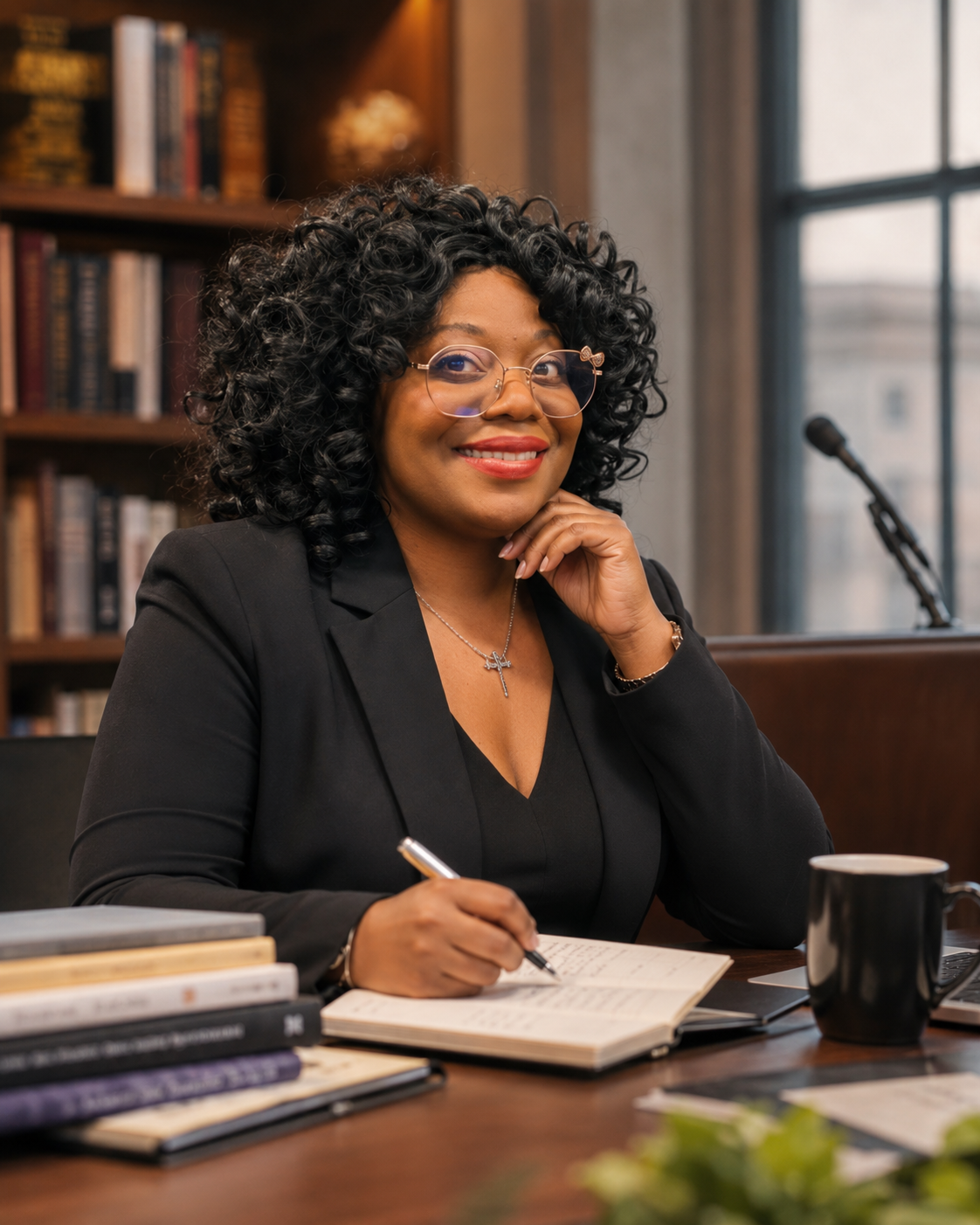
The doctorate provided the methodology, but curiosity had been shaping the scholar for years.
People may look at a completed dissertation and assume the scholarship began with doctoral enrollment.
Mine did not.
“My doctorate gave me the tools to investigate questions I had already learned to ask.”
It taught me how to organize observations, engage scholarly literature, collect data, protect participants, analyze experiences, establish rigor, and contribute something new to an academic conversation.
But life provided the curiosity.
That curiosity was present when I stood before children at community libraries and translated science into something they could experience.
It was present when I corrected assumptions about how I earned my place at a university.
It was present when I noticed the difference between what organizations claimed to value and what their practices revealed.
It was present when I became a professor and listened to students trying to locate themselves within institutions.
And it was present when history shifted my research in real time.
I did not become a scholar only when my degree was conferred.
The scholar had been forming through years of noticing, questioning, communicating, and following ideas that would not leave me alone.
What Had Been Brewing All Along
I have never been interested only in identifying that inequity exists.
My curiosity has always lived in the why and the how.
How do people learn to categorize one another?
Why do certain beliefs survive across generations?
How does communication shape what communities accept as normal?
How do institutions preserve old hierarchies beneath new language?
Why does excellence disrupt some people’s expectations?
How can an organization celebrate diversity symbolically while resisting the structural changes required to support it?
And what happens to students when an institution invites them inside but never fully reimagines who belongs at the center?
Those questions connect the teenager who dreamed of becoming a journalist, the Science Center presenter, the college student, the employee, the professor, the national presenter, and the researcher I have become.
My life did not give me every answer.
It gave me the curiosity to keep asking better questions.
The doctorate provided the methodology.
The participants provided their trust.
The historical moment provided urgency.
And the research provided language for something that had been brewing all along.
Some ideas arrive as inspiration.
Others arrive as responsibility.
And when an idea refuses to leave you, perhaps it is because the question is asking you to follow it somewhere deeper.
Remember, bold conversations, brewed fresh - one cup at a time!
Dr. Courtney Nicole Johnson
Founder of CourtneyCoffeeChats
Bold Conversations, Brewed Fresh.
Welcome to The Coffeehouse Collection - where higher education meets heart. Here, you will find Scholarly Sips, Courageous Cups, Life Latte Moments, and Freshly Brewed Reflections - bold conversation and personal insights brewed just for you!
