

Blog 31/ Holding the Line: Watching Higher Education Shift While Standing Inside It

Holding the work. Holding the mission. Holding the line.
Reflections on the changing landscape of higher education.
As I hold the line in higher education, I find myself reflecting on the many moving parts that allow an institution to function as a thriving ecosystem. Universities are not simply buildings, budgets, or policy documents. They are living systems made up of students, faculty, staff, administrators, advisors, researchers, and community partners—each contributing to the academic mission in ways both visible and unseen.
When these parts are working in harmony, institutions become spaces where learning flourishes, ideas are challenged, and students find pathways to opportunity. But like any ecosystem, universities are deeply influenced by the environments that surround them. Social and political forces outside the institution inevitably ripple inward, shaping how campuses operate and how the people within them experience their work.
Right now, those forces are shifting rapidly.
Across the country, higher education institutions are navigating a moment of intense transition. Legislative debates, economic pressures, ideological conflicts, and shifting public expectations are reshaping the landscape of education. These dynamics are not abstract conversations happening somewhere beyond campus gates. They are showing up in faculty meetings, strategic planning discussions, student programming decisions, and the policies that guide institutional priorities.
For those of us working within higher education, the changes are not theoretical. They are unfolding in real time.
The People Who Sustain the Ecosystem
At the end of February, I joined United Campus Workers Arizona and attended my first meeting. Listening to educators, staff members, and campus workers speak candidly about the challenges they are facing offered a powerful reminder of what sustains higher education institutions.
Universities rely on the labor of people who show up every day to support students and maintain the academic enterprise. Faculty prepare lectures, mentor students, and conduct research. Staff members manage student services, financial aid systems, campus programming, and operational infrastructure. Advisors help students navigate complex degree pathways. Student affairs professionals create programs that foster belonging and engagement.
When institutions function well, it is because these individuals are working together within a carefully balanced ecosystem.
But when the surrounding environment shifts, it is often these same individuals who feel the pressure first.
During the meeting, colleagues shared concerns about cost-of-living pressures affecting faculty and staff, the broader national conversations around immigration enforcement policies and their potential impact on campus communities, and the uncertainty many institutions are experiencing as budgets tighten and priorities change. Others spoke about layoffs occurring even as campuses attempt to navigate political and economic pressures.
These conversations made clear that higher education institutions are not abstract systems. They are communities sustained by people whose work makes the mission of education possible.
When the ecosystem shifts, their experiences tell the story first.
When Policy Ripples Through the Institution
Higher education has increasingly become a focal point for political debate. Legislative proposals, executive directives, and ballot initiatives are reshaping the regulatory and financial environments in which institutions operate.
Policies crafted in statehouses and federal offices rarely remain confined to those spaces. They travel through layers of governance.
A proposal introduced in a legislative chamber may eventually shape decisions made by governing boards. Those decisions then inform institutional strategies crafted by university leadership. Leadership directives influence faculty practices, program structures, and campus policies. Ultimately, students experience these shifts through the programs available to them, the services they can access, and the climate they encounter on campus.
The ripple effect is often subtle at first. Language changes. Programs are reorganized. Funding priorities shift. Administrative structures evolve.
Over time, however, these adjustments accumulate, gradually reshaping the institutional landscape.
My research on the Post-DEI Hollowing Phenomenon™ examines what happens when identity-affirming programs and structures are dismantled or significantly weakened. What often remains is the outward appearance of inclusion without the infrastructure that once made those commitments meaningful.
The result is an institutional shell that still speaks the language of belonging but no longer sustains the structures necessary to support it.
For students, faculty, and staff navigating these changes, the gap between institutional messaging and lived experience can become increasingly difficult to ignore.
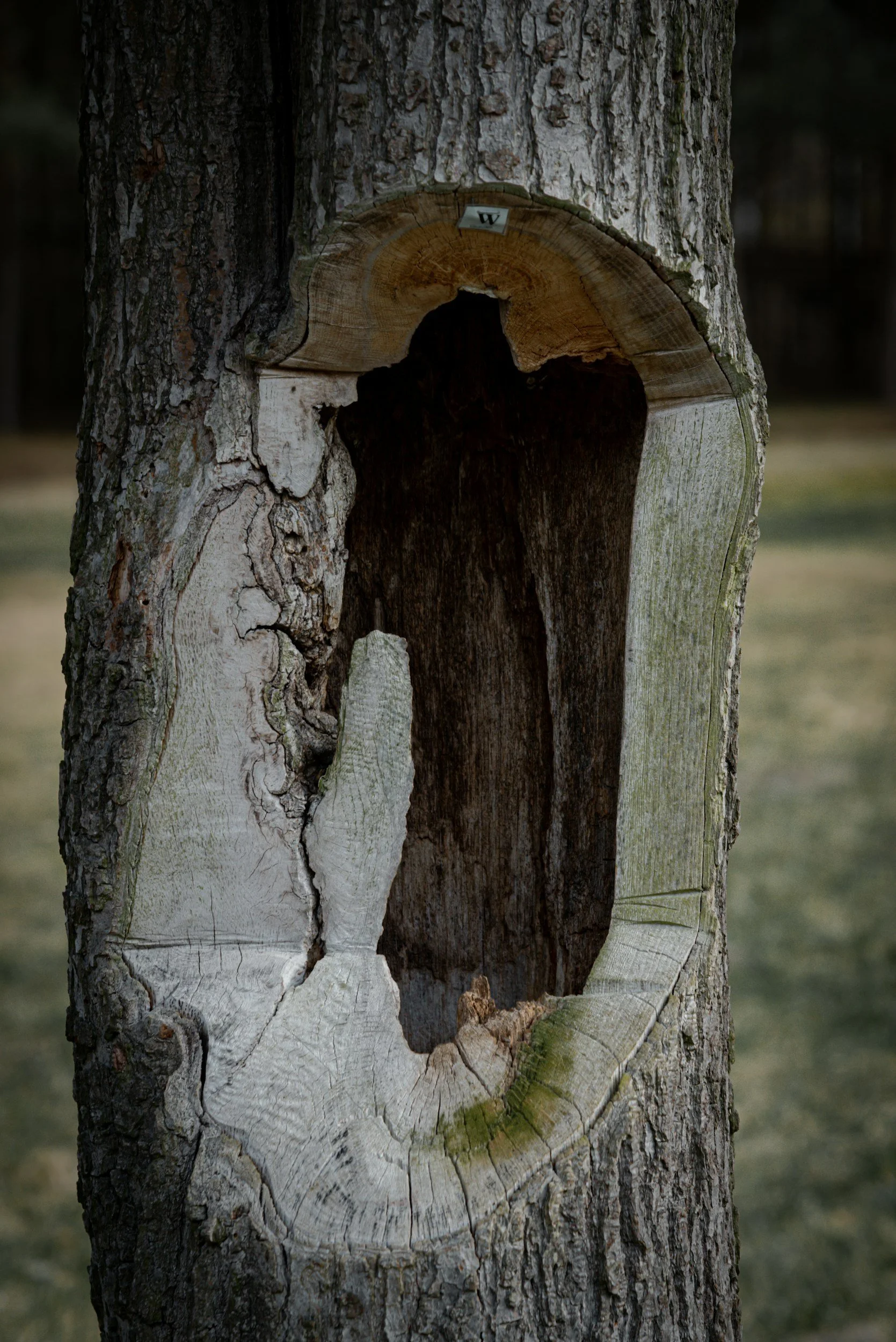
Image: A hollowed-out tree trunk symbolizing institutional structures that remain standing while their internal support systems are removed.
Teaching While the Ground Moves
Even as these broader structural shifts unfold, the everyday work of higher education continues.
Faculty are still teaching courses, grading assignments, and mentoring students. Advisors are helping students plan their futures. Staff members are creating programming designed to build community and support student success.
In my own work as an adjunct instructor, I am constantly reminded that students depend on the stability of the classroom. They arrive with aspirations, uncertainties, and questions about their futures. For many of them, the classroom remains one of the few spaces where intellectual exploration and personal growth can still occur without interruption.
Holding the line in higher education means continuing to show up for students even when the broader institutional environment feels uncertain.
It means recognizing that while policies shift and structures evolve, the responsibility to support student learning remains constant.
Scholarship as Witness
Moments of institutional change demand careful documentation.
Scholarship helps society understand how systems evolve—how policies reshape institutions, how campus climates shift, and how those changes are experienced by the people living within them. Researchers identify patterns, analyze institutional behaviors, and capture the lived experiences of students, faculty, and staff navigating complex environments.
In the current moment, that work feels especially urgent.
My research on the Post-DEI Hollowing Phenomenon™ examines what happens when identity-affirming programs and structures are dismantled or significantly weakened across campuses. In many cases, institutions continue to speak the language of inclusion while the structural supports that once sustained belonging quietly disappear.
What remains is an institutional shell that appears intact but no longer holds the same support systems within it.
This phenomenon is not simply about policy shifts. It is about the lived experiences of students who rely on culturally grounded spaces for mentorship, connection, and affirmation. It is also about the educators and staff members who have worked to build those spaces and who now find themselves navigating an evolving institutional terrain.
Documenting these changes matters.
Holding the Line
Despite the turbulence surrounding higher education, one truth remains clear: institutions are sustained by people who believe deeply in the transformative power of education.
Faculty continue to teach.
Staff continue to support students.
Researchers continue to ask difficult questions.
Advocates continue to push for equitable opportunities within systems that are constantly evolving.
Holding the line in higher education means continuing this work even as the broader landscape shifts.
Later this month, I will present my research on the Post-DEI Hollowing Phenomenon™ at the National Association of Diversity Officers in Higher Education (NADOHE) conference.
The timing of that presentation carries personal significance.
It will take place on March 26—my birthday.
Standing in a room with scholars, practitioners, and institutional leaders from across the country, I will share research that emerged from lived observation, institutional experience, and a deep commitment to understanding how higher education is changing in this moment.
Presenting on that day feels less like coincidence and more like calling.
Because when institutions evolve under pressure, scholarship must do more than produce knowledge.
It must bear witness.
Across campuses, many of us are witnessing systems adapt, policies reshape programs, and institutional priorities shift. Yet we are also witnessing the resilience of educators and students who continue to believe in the purpose of higher education.
For those of us standing inside these institutions, the path forward remains clear:
We hold the line.
We document the moment.
And we continue the work.
Remember, bold conversations, brewed fresh - one cup at a time!
Dr. Courtney Nicole Johnson
Founder of CourtneyCoffeeChats
Bold Conversations, Brewed Fresh.
Welcome to The Coffeehouse Collection - where higher education meets heart. Here, you will find Scholarly Sips, Courageous Cups, Life Latte Moments, and Freshly Brewed Reflections - bold conversation and personal insights brewed just for you!
